posted in
The use of "tú" in Dominican Spanish
Ever heard a Dominican say “¿Qué tú estás haciendo?” and thought…
“Wait… why is the tú there?”
Welcome to real Dominican Spanish.
In Standard Spanish, you usually learn:
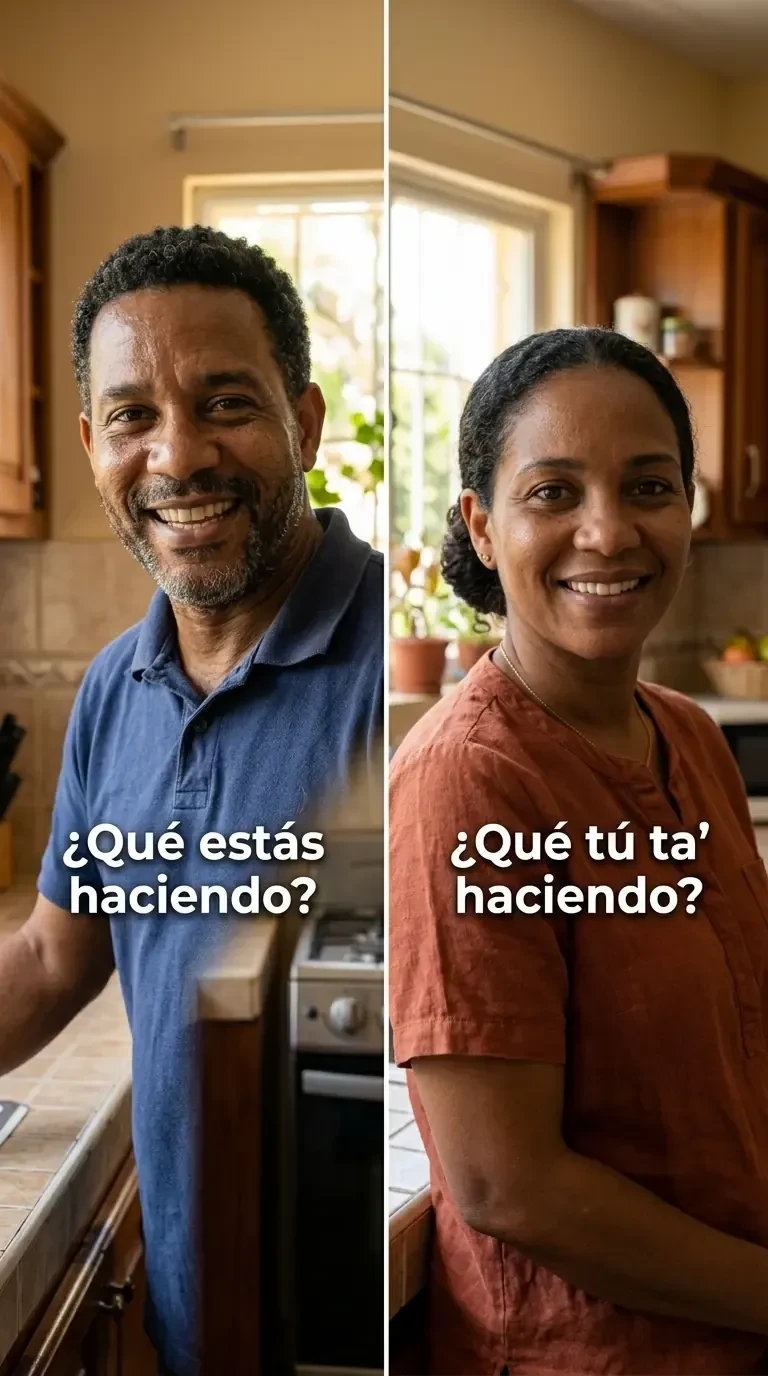
"¿Qué estás haciendo?"
What are you doing?
But in everyday Dominican Spanish, you will often hear:
"¿Qué tú tá haciendo?"
And no, it’s not “wrong Spanish.”
It’s Dominican rhythm. Dominican structure. Dominican flavor.
Dominicans don’t always speak like your textbook. We speak with attitude, and personality.
That’s why you can study Spanish for years and still freeze when a Dominican starts talking in real life.
Because the problem is not always your vocabulary.
Sometimes the problem is that nobody taught you the Dominican patterns.
In Dominican Spanish, we often use the subject pronoun "tú" in questions where other Spanish speakers may drop it.
So instead of only hearing:
"¿Qué estás haciendo?"
You may hear:
"¿Qué tú 'tá haciendo?"
"¿Dónde tú va?"
"¿Cómo tú te llamas?"
"¿Cuándo tú vienes?"
That little **tú** is part of the Dominican sound.
It gives the phrase that familiar Caribbean flow you hear in houses, colmados, family conversations, voice notes, and everyday street talk.
So if you want to understand Dominicans faster, don’t just study more grammar.
Start training your ear for the way Dominicans actually speak.
Because Dominican Spanish is not just words.
It’s rhythm.
It’s culture.
It’s speed.
It’s connection.
Want to practice? Write your dominican version of any phrase using this "tú" pattern in the comments